Filters
Question type

Study Flashcards

DNA technology has many medical applications. Which of the following is not done routinely at present?


A) production of hormones for treating diabetes and dwarfism
B) analysis of gene expression for more informed cancer treatments
C) gene editing by the CRISPR-Cas9 system in viable human embryos to correct genetic diseases
D) prenatal identification of genetic disease alleles

E) C) and D)
F) A) and D)

Correct Answer

verifed

verified

A paleontologist has recovered a bit of tissue from the 400-year-old preserved skin of an extinct dodo (a bird) . To compare a specific region of the DNA from a sample with DNA from living birds, which of the following would be most useful for increasing the amount of dodo DNA available for testing?


A) SNP analysis
B) polymerase chain reaction (PCR)
C) electroporation
D) gel electrophoresis

E) C) and D)
F) A) and D)

Correct Answer

verifed

verified

Which of the following sequences is most likely to be cut by a restriction enzyme?


A) 5′-AATTCT 3′ 3′-TTAAGA-5′
B) 5′-AATATT-3′ 3′-TTATAA-5′
C) 5′-AAAATT-3′ 3′-TTTTAA-5′
D) 5′-ACTACT-3′ 3′-TGATGA-5′

E) A) and B)
F) All of the above

Correct Answer

verifed

verified

In a comparison of two DNA sequences found in the same location on homologous chromosomes, one of the homologs carries the sequence 5′-AACTACGA-3′, and the other homolog carries the sequence 5′-AACTTCGA-3′. Within a population, you discover that each of these sequences is common. Which of the following statements correctly describes theses sequences?


A) They contain a SNP that may be useful for genetic mapping.
B) They can identify a protein-coding region of a gene.
C) They may cause disease.
D) They may carry out RNA interference.

E) None of the above
F) A) and C)

Correct Answer

verifed

verified

Which of the following correctly lists the processes in order for one cycle of polymerase chain reaction (PCR) ?


A) denature DNA; add fresh enzyme; anneal primers; add dNTPs; extend primers
B) anneal primers; denature DNA; extend primers
C) extend primers; anneal primers; denature DNA
D) denature DNA; anneal primers; extend primers

E) A) and B)
F) All of the above

Correct Answer

verifed

verified

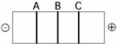
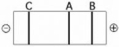
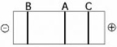
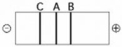
Use the figure to answer the following question. Use the figure to answer the following question.   The segment of DNA shown in the figure has restriction sites I and II, which create restriction fragments A, B, and C. Which of the gels produced by electrophoresis best represents the separation and identity of these fragments? A)    B)    C)    D)   The segment of DNA shown in the figure has restriction sites I and II, which create restriction fragments A, B, and C. Which of the gels produced by electrophoresis best represents the separation and identity of these fragments?


A) Use the figure to answer the following question.   The segment of DNA shown in the figure has restriction sites I and II, which create restriction fragments A, B, and C. Which of the gels produced by electrophoresis best represents the separation and identity of these fragments? A)    B)    C)    D)
B) Use the figure to answer the following question.   The segment of DNA shown in the figure has restriction sites I and II, which create restriction fragments A, B, and C. Which of the gels produced by electrophoresis best represents the separation and identity of these fragments? A)    B)    C)    D)
C) Use the figure to answer the following question.   The segment of DNA shown in the figure has restriction sites I and II, which create restriction fragments A, B, and C. Which of the gels produced by electrophoresis best represents the separation and identity of these fragments? A)    B)    C)    D)
D) Use the figure to answer the following question.   The segment of DNA shown in the figure has restriction sites I and II, which create restriction fragments A, B, and C. Which of the gels produced by electrophoresis best represents the separation and identity of these fragments? A)    B)    C)    D)

E) A) and B)
F) B) and D)

Correct Answer

verifed

verified

What is the most logical sequence of steps for splicing foreign DNA into a plasmid and inserting the plasmid into a bacterium? I Transform bacteria with a recombinant DNA molecule. II Cut the plasmid DNA using restriction enzymes (endonucleases) . III Extract plasmid DNA from bacterial cells. IV Hydrogen-bond the plasmid DNA to non-plasmid DNA fragments. V Use ligase to seal plasmid DNA to non-plasmid DNA.


A) II, III, V, IV, I
B) III, II, IV, V, I
C) III, IV, V, I, II
D) IV, V, I, II, III

E) A) and B)
F) All of the above

Correct Answer

verifed

verified

Use the following information to answer the question. Organisms share many conserved core processes and features, including transcription and translation, using a uniform genetic code. Scientists have used these shared processes and features in biotechnology. For example, for the process of some transformations, a plasmid is constructed when a eukaryotic gene of interest is added with an antibiotic resistant gene such as beta-lactamase, which is used for ampicillin resistance. This plasmid is then inserted into a prokaryotic bacterial cell, such as E. coli, through a transformation process that leads to the production of the product protein from the eukaryotic organism. To culture the bacteria and obtain the protein product, the bacteria must grow. Select the appropriate condition to determine if the plasmid has entered the E. coli bacterial cell.


A) nutrient broth to which no antibiotic has been added
B) water to which ampicillin has been added
C) nutrient broth to which ampicillin has been added
D) nutrient broth to which other resistant bacteria have been added

E) A) and B)
F) None of the above

Correct Answer

verifed

verified

Which of the following processes uses labeled probes to visualize the expression of genes in whole tissues and organisms?


A) RT-PCR
B) in situ hybridization
C) DNA microarrays
D) RNA interference

E) A) and B)
F) A) and C)

Correct Answer

verifed

verified

Which of the following statements describes one of the technical reasons why gene therapy is problematic in humans?


A) Most cells with an engineered gene do not produce gene product.
B) Cells with transferred genes are unlikely to replicate.
C) Transferred genes may not have appropriately controlled activity.
D) mRNA from transferred genes cannot be translated.

E) B) and D)
F) None of the above

Correct Answer

verifed

verified

One possible use of transgenic plants is in the production of human proteins, such as vaccines. Which of the following issues is a possible hindrance that must be overcome in order for this process to work properly?


A) prevention of transmission of plant allergens to the vaccine recipients
B) prevention of vaccine-containing plants being consumed by insects
C) use of plant cells to translate non-plant-derived mRNA
D) inability of the human digestive system to accept plant-derived protein

E) C) and D)
F) B) and C)

Correct Answer

verifed

verified

Why might using retroviral vectors for gene therapy increase the patient's risk of developing cancer?


A) Retroviral vectors may introduce proteins from the virus.
B) Retroviral vectors do not express the genes that were introduced into a patient's cells.
C) Retroviral vectors do not integrate their recombinant DNA into the patient's genome.
D) Retroviral vectors integrate recombinant DNA into the genome in ways that may misregulate the expression of genes at or near the site of integration.

E) A) and B)
F) A) and C)

Correct Answer

verifed

verified

Pax-6 is a gene that is involved in eye formation in many invertebrates, such as Drosophila. Pax-6 is also found in vertebrates. A Pax-6 gene from a mouse can be expressed in a fly and the protein (PAX-6) leads to a compound fly eye. This information suggests which of the following characteristics of this gene?


A) Pax-6 genes are identical in nucleotide sequence.
B) PAX-6 proteins have identical amino acid sequences.
C) Pax-6 is highly conserved and shows shared evolutionary ancestry.
D) PAX-6 proteins are different for formation of different kinds of eyes.

E) A) and B)
F) B) and C)

Correct Answer

verifed

verified

Which of the following characteristics of short tandem repeats (STRs) DNA makes it useful for DNA fingerprinting?


A) The number of repeats is highly variable from person to person or animal to animal.
B) The sequence of DNA that is repeated varies significantly from individual to individual.
C) The sequence variation is acted upon differently by natural selection in different environments.
D) Every racial and ethnic group has inherited different short tandem repeats.

E) All of the above
F) C) and D)

Correct Answer

verifed

verified

Plants are more readily manipulated by genetic engineering than are animals because


A) plant genes do not contain introns.
B) more vectors are available for transferring recombinant DNA into plant cells.
C) a somatic plant cell can often give rise to a complete plant.
D) plant cells have larger nuclei.

E) A) and B)
F) A) and C)

Correct Answer

verifed

verified

Which of the following problems with animal cloning might result in premature death of the clones?


A) use of pluripotent instead of totipotent stem cells
B) use of nuclear DNA as well as mtDNA
C) abnormal gene regulation due to variant methylation
D) the indefinite replication of totipotent stem cells

E) A) and C)
F) A) and D)

Correct Answer

verifed

verified

Which of the following tools of DNA technology is incorrectly paired with its use?


A) electrophoresis-separation of DNA fragments
B) DNA ligase-cutting DNA, creating sticky ends of restriction fragments
C) DNA polymerase-polymerase chain reaction to amplify sections of DNA
D) reverse transcriptase-production of cDNA from mRNA

E) C) and D)
F) A) and B)

Correct Answer

verifed

verified

Showing 41 - 57 of 57

Related Exams

Show Answer